
Vande Mataram!”
Just two words — yet they carry the heartbeat of an entire nation.
These words are not merely a salutation; they are an emotion, a spiritual awakening, a symbol of India’s unity and strength.
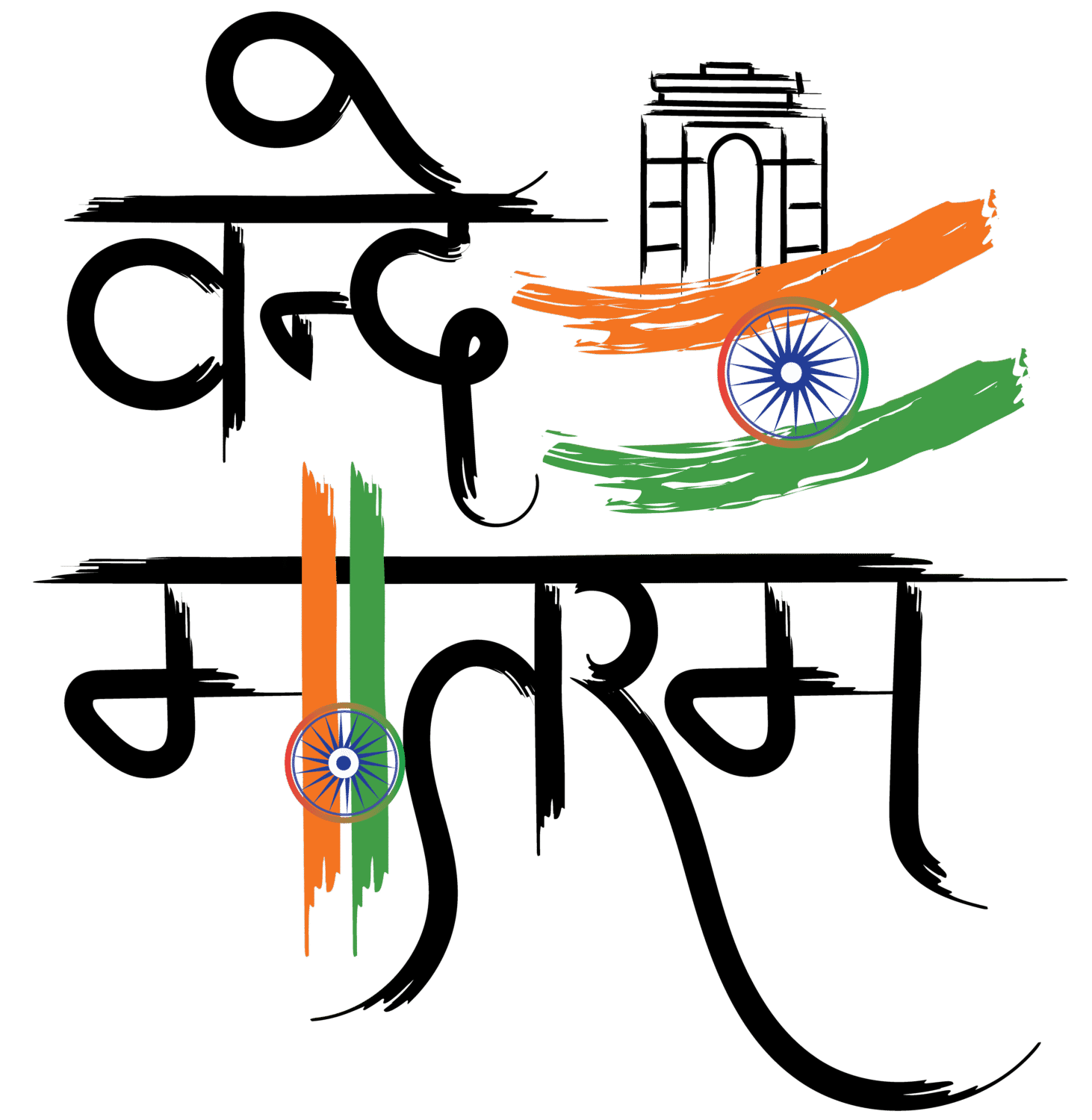
The phrase “Vande Mataram” — meaning “I bow to thee, Mother” — was first written by Bankim Chandra Chattopadhyay in 1870, and later included in his famous Bengali novel Anandamath, published in 1882.
The novel was set against the backdrop of the Sannyasi Rebellion of the late 18th century, when Indian monks rose against British oppression.
In that story, the song “Vande Mataram” becomes a rallying cry for the freedom fighters who see Bharat Mata — Mother India — as divine, sacred, and worthy of every sacrifice.
When the Indian National Congress was formed in 1885, Vande Mataram soon became its soul.
It was sung for the first time in a political gathering at the 1896 session of the Congress by Rabindranath Tagore himself.
During the Swadeshi Movement (1905–1911), it echoed in every street, every school, every protest — uniting people across languages, castes, and regions.
Freedom fighters such as Lala Lajpat Rai, Bal Gangadhar Tilak, Bipin Chandra Pal, and Subhas Chandra Bose considered it a mantra of patriotism.
When India gained independence, Vande Mataram was given the status of the National Song of India, while Jana Gana Mana became the National Anthem — both equally honored as symbols of national pride.
At a deeper level, Vande Mataram is not just political; it is spiritual.
It celebrates the idea of the Motherland as Goddess — the embodiment of Shakti (energy), Lakshmi (prosperity), and Saraswati (wisdom).
This reflects the Vedic vision of unity between land, nature, and divinity — where the rivers, fields, and skies are not separate from the soul of the people who live upon them.
The song reminds us that serving the nation is not mere duty — it is devotion.
When we say “Vande Mataram,” we do not only salute a map or territory — we bow to the eternal spirit of Bharat that lives through her culture, her knowledge, her compassion, and her courage.
Even today, Vande Mataram resonates as a call to awaken the youth of India —
to rise above divisions,
to preserve the beauty of our land,
and to honor the values of truth, service, and unity.
It teaches us that true patriotism is not in loud slogans but in quiet action — in education, innovation, and empathy.
Let us remember — “Vande Mataram” is not a song of the past; it is a prayer for the present and a promise for the future.
Every time we utter these words, may we feel the same spirit that inspired millions to dream of a free and strong India.